Frogboy Frogboy

Road Building…Your thoughts?

Road Building…Your thoughts?

We really want to avoid having to build “workers” or some other construction unit to build out of city improvements.  But at the same time, we’d like it to be more interesting than simply clicking “build road to city X”.

What do you think?

653,801 views 287 replies
Reply #226 Top

Okay so thats 9 pages of "No raods should be build by GNOMES!" "NO, FAIRIES!" "GNOMES!" "FAIRIES!!"


Yes..... anyway I wanted to mention something else about roads. What they are built with. Obviously everyone knows you start with a dirt track and get various upgrades (preferably, rather than at some point getting a mega upgrade like Civ4).

Heres the thing. Why does it have to be paved with stone? Or Cobbled (Im not sure of the road building level people are supposed to have).

I want my roads paved with the skulls of the enemys.

One of the my favourite parts about EQ2 and WoW BC is the Dead River and Path of Glory (I think).

One is a dried out river bead that has endless skulls and bones running along it.

The other is a path to the dark portal used to invade Azeroth.


Both are REALLY COOL!

I can't find a EQ2 picture and I don't have a sub for that anymore, but they had a better effect (higher res graphics).

But you could have obisdian roads, magic roads, dark black evil roads, dragon bone roads. Graphically its not a big change but 'flavour wise' its pretty unique and you can even get trait like bonuses from it. (Yes I like traits).

Reply #227 Top

Bwahahaha... I like the skull idea. Of course it requires a tech, because skulls tend to be not strong enough for heavy traffic so in order to do it right you must first unlock the secret...

It may provide a penalty to movement for enemies because of the fearsome effect these roads provide. I could see that work. :) I will be silent on how to build roads from now on since it is starting to annoy even me - and I did not even read the first 8 pages!

Reply #228 Top

Quoting Shurdus, reply 225
Then again, with roads between cities you may not be able to order a road being built between a town and the border with a neighbor. What if I want that because I plan to invade?
End of Shurdus's quote

If you're not trading with your neighbor, you're not going to have a road. I like this speedbump to initial conquest -- players have a little more time to build up because initial contact is going to involve either trade and diplomacy or an army crossing a gap in the road network. Building a road would slow down an initial army; the road is for reinforcements. Not having a road built when you take the first city gives the defender a chance to strike back before you reinforce.

You often hear about the "slippery slope" in games, particularly strategy games. This is the problem of the player in the lead getting advantages for being in the lead. The slippery slope is a natural part of this sort of game -- players pursue goals in the game precisely because they provide advantages in the game, and this is what drives the conflict. But it's also good to have "grippery slope" mechanisms that allow a player whose fortunes are poor to claw their way back.

This is particularly true in the early game, or the early part of a war. It really sucks to feel like you lost just as things were starting and most of your gameplay experience was just an inevitable, helpless descent following your initial defeat. I'm sure there will be trump cards in the magic system, and probably some in other systems as well, but I think there's also a benefit in organic roads giving defenders a slight circumstantial advantage in responding to that first lost city.

Quoting Shurdus, reply 225
I see your point though even though I disagree it will distract from the game. I do not feel like roads are secondary though. In an empire management game roads are vital to the economy. They are not things of secondary importance.
End of Shurdus's quote

The roads which are economically important will arise as a function of the economy. This is exactly the need that organic roads fill, blending roads as an economic force and roads as an economic indicator. What you are objecting to is not a lack of economic roads -- for there is no such lack -- but a lack of military roads, and more specifically (since the economic roads also have military value) to a lack of those military roads which serve no economic purpose.

Direct road-building decisions are entertaining in some games, but others either wisely avoid them or are hampered by them. I think Civ 4 would be improved if roads and especially railroads worked like harbors -- build a connector building and join the network. (Mind you, Civ 4 is pretty committed to the worker system and a lot of other mechanics tie into it -- movement is balanced on the assumption that nations will develop carpets of roads, slave-taking is contingent on the presence of workers outside cities, other improvements require workers to build, and city growth is balanced for worker production -- so it wouldn't be a trivial change.)

As far as Elemental is concerned, there is a particular situation when this problem would supposedly come up: the player wishes to speed up military movement along a path which does not correspond to intercity trade. Of course this will happen, but when it does, the player will have other options which are more rewarding than army-built roads. General fast movement can be accomplished through assembling a fast army (e.g., cavalry, pathfinder leader, etc.), which uses the recruitment system, which is featured gameplay for Elemental. More broadly, magic and crafting have the potential for a diverse set of mobility solutions. In the early game, a typical gambit allowing fast army movement might be a cheap forestwalking charm, or a single capable hero with a flying broom. In the late game, a powerful empire could use an expensive spell to establish a gate from a newly conquered city to a built-up recruitment center (or to another dimension, permitting deployments of summoned creatures). (SotS is worth a look for mobility ideas. Each of its six factions has a different means of travel between stars, and only one of them (Zuul) is analogous to road-building.)

If you've ever played MTW2, you know what a chore it is to build watchtowers. Watchtower building doesn't just tie up units and drain upkeep and construction costs, it's also something annoying that you have to remember to do every turn. This was excised in ETW in favor of a system where you get the benefits of watchtowers automatically, and it's an incontestable improvement. By contrast, roads in MTW2 were treated as economic buildings in settlements which -- as they were upgraded -- provided roads to other settlements nearby. There wasn't a way to construct roads to nowhere, and it never felt like a lack. Organic roads in Elemental would be similar, although I see them as upgrading automatically -- particularly since the main reason not to upgrade roads in MTW2 was simply forgetting to do it (and kicking yourself when you realized you'd been neglecting the roads). The real gating mechanism for road upgrades in MTW2 was population/settlement size class, which corresponds nicely to possible Elemental criteria based on prosperity and trade.

Quoting Shurdus, reply 225
Whatever may be of that, would it not be great if there was a system where the road fairies laid down roads between cities and to have the option of the army laying down roads wherever else it sees fit?
End of Shurdus's quote

No. Once again, army-based roads only compound the problems of the worker-road system. The presence of the option will not be benign; either the player who does not use army-built roads will be at a disadvantage (creating an incentive to use this undesirable mechanism), or army-built roads will not confer an advantage, in which case the game will be weighted down with a useless, tedious, and ultimately illusory option.

I also want to object to dismissing abstraction as "fairies." Elemental, when finished, will abstract a lot of things that could, in theory, have been the subject of detailed mechanics. Abstraction isn't harmful in itself, and it's also not absurd in itself. There may be some abstracted things which happen because of fairies, but roads are not among them. A fairy-related spell for rapid craftsmanship might be nice to have, but the crafting system in general shouldn't be interpreted as "you design the item and then fairies make it" just because you don't swing the hammer and quench the blade manually. Similarly, there might be a spell that lays down a fairy road which allows swift travel but only lasts a couple of turns and risks deadly random encounters, but that doesn't mean there's any point to saying that organic roads in general will be constructed by fairies beyond baseless denigration of the organic road concept. Organic roads won't be paved by fairies any more than fairies will cut the timbers for automatic starting-level city walls.

Reply #229 Top

Hmmm, this reminds me of an interesting quote from a book, ect. Wide roads are a sign of military usage, thin and snaky roads are a sign of a more peaceful individual.

Warlike Nations are going to historically be better at building roads, and have a greater desire to build roads. Especially large, smoothly paved, wide roads.

Yes, Roads are good for trade and economy, but the primary focus of any Large Road Network is for military usages. The American Interstate was initially created with military intent. As well as Germany's Autobon. As well as the Roman road system.

Reply #230 Top

It would seem to come down to a simple fact at this point, (.291), in that without a ROAD connecting any 2 Towns, by specifically selecting the link, there is no/zero caravan traffic. So unless that initial idea is changed, roads will remain the sole criteria for local trade and simply having 2 towns within ear shot of each other will not.

Perhaps .295 will shed some further insight into the Dev's plans , or not...

Reply #231 Top

Networks of Overland Walls, with choke-points and valleys dotted with Fortresses. One road connecting most of the cities, with a road from the Capital to each quadrant of the Wall fortifications.


Reply #232 Top

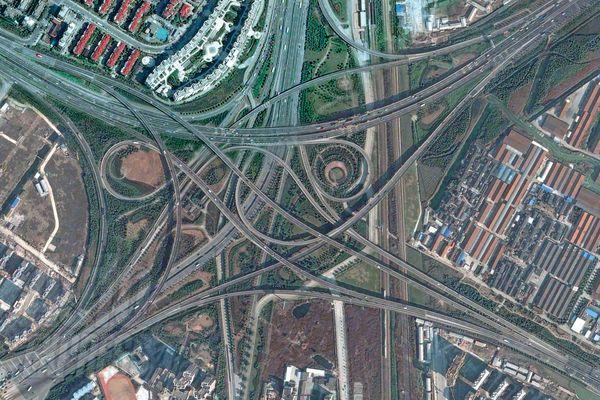
Roads obviously require workers.


Shanghai, China


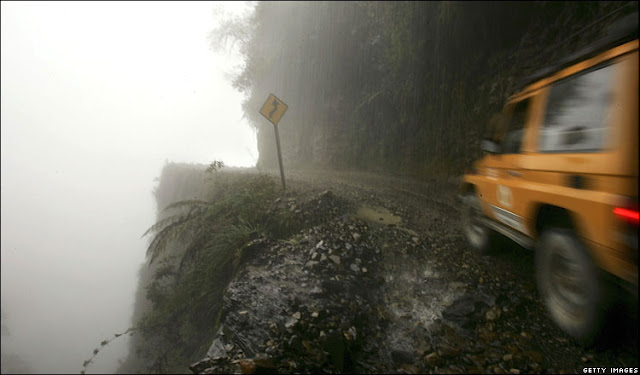
Of course, you can always leave it up to amateurs.

North Yunga, Bolivia

Reply #233 Top

Aroddo: Is that 2nd one the "death road" in South America?

Reply #234 Top

@leo: yup. did you spot the ghosts of the deceased in the fog? :)

Reply #235 Top

I like this idea.

Road expenditure is part of city maintenance costs.  Roads begin to be built automatically, sped up by technological development.


Soldiers can speed up the process, if told to.  Earth magic can also build roads.

Reply #236 Top


Quoting Tasunke, reply 231
Networks of Overland Walls, with choke-points and valleys dotted with Fortresses. One road connecting most of the cities, with a road from the Capital to each quadrant of the Wall fortifications.

 
End of Tasunke's quote


Which would cost incredible amounts of resources, doesn't seem like a cool idea and sounds like it would impact gameplay unnesscarily and annoyingly. Think about it, did the Roman's ever do it? No. How long did it take the Chinese to build the Great Wall? They expended great amounts of human capitol and resources to accomplish it.

Reply #237 Top

Maybe roads should be on a sliding scale. Completely ignorable if you are fine with dirt ones and centrally important to strategy if you are more of the public works type. Cost of maintenance would be offset by tactical and trade use. It would take time and resources and only really be feasible to do in the midgame but very beneficial to a heavily armored unit strategy that had few move points. I think that if my enemy built roads it should decrease his economy enough to offset his ability to build large numbers of soldiers. Magic could be very useful on both sides here and really make strategies vary over a 24 person campaign.

Reply #238 Top

Quoting seanw3, reply 237
I think that if my enemy built roads it should decrease his economy enough to offset his ability to build large numbers of soldiers.
End of seanw3's quote

And then you march a bigger army down his roads and take all his cities?  Roads implemented this way sound like a "lose the game" button.

Reply #239 Top

Ditch the concept of workers entirely

Workers add monotonous and tedious micromanagement that adds nothing interesting to the game

Instead, focus on what _is_ the interesting decision making here - where is an improvement built, what does it do, and what does it cost?

That could be a road, a fort, a watchtower, a magical construct, or an economic enhancer of some sort (irrigation, waterwheels, mines, whatever)

The point isn't really what the exact items are, so much as the concept that you give the player a variety of options, and then let them be constructed/handled in the simplest manner possible, rather than ordering a unit around a map one square at a time (even with automation tools, having 30 workers buzzing around your empire building improvements is an ugly part of civ and related games)

More options, more choices, less micromanagement

Reply #240 Top

I want my roads paved with the skulls of the enemys.
End of quote

I endorse anything that involves the skulls of enemies +1

Reply #241 Top

Quoting Yaguer, reply 236
           
Quoting Tasunke, reply 231Networks of Overland Walls, with choke-points and valleys dotted with Fortresses. One road connecting most of the cities, with a road from the Capital to each quadrant of the Wall fortifications.


Which would cost incredible amounts of resources, doesn't seem like a cool idea and sounds like it would impact gameplay unnesscarily and annoyingly. Think about it, did the Roman's ever do it? No. How long did it take the Chinese to build the Great Wall? They expended great amounts of human capitol and resources to accomplish it.
End of Yaguer's quote


Honestly, the In-game function is probably going to have "similar things" implemented via earth magic, yet not buildable by mundane means ... sad panda.

However, hopefully they will have the ability to build fortresses, and the ability to build legions at max tech faster than 400 turns xD

Reply #242 Top

Organic roads still seem good to me. The only game I ever multiplay is Quake Live so having one less thing for the AI to be horribly inferior at than the singleplayer sounds good to me.

I do wonder how easy it is to implement though, since it would be important to have roads link to other roads too, rather than just have a load of stripes.


TheProgress' idea seems good too, it would encourage main roads with others linking up to them. I don't care about the fairies thing, having a bunch of 'workers' visibly run out of the city to do the work would probably sort that out anyway.


I'm not sure about having armies build roads, it just seems like a worker unit. It could be alright to have some kind of caravan that you can add to armies to help with sieges (fortifying, undermining, repairs, etc), that could be used for roads.


Also, if I start building a road toward enemy land, I want the AI to react. It would be cack for it to be some obvious strategy that the Ai is incapable of spotting.

Reply #243 Top

And then you march a bigger army down his roads and take all his cities? Roads implemented this way sound like a "lose the game" button.
End of quote

But his roads could be cut off just like in real life when an enemy is coming, burning bridges etc. How did you think napolean was defeated?

Reply #244 Top

Quoting seanw3, reply 243

And then you march a bigger army down his roads and take all his cities? Roads implemented this way sound like a "lose the game" button.
But his roads could be cut off just like in real life when an enemy is coming, burning bridges etc. How did you think napolean was defeated?
End of seanw3's quote

So you spend all that money on roads for military mobility, only to destroy them.  Now the enemy has a superior army and you have nothing.

Reply #246 Top

Do road-building and improvements in general like in "Civilization: Call to Power". This is by far the best solution I've seen, and it has been really disappointing that the real Civilization series didn't continue that idea. It almost just seems they ignored an execelent idea because they refused to acknowledge Call to Power even existed. 

Reply #247 Top

Quoting Carewolf, reply 246
Do road-building and improvements in general like in "Civilization: Call to Power". This is by far the best solution I've seen, and it has been really disappointing that the real Civilization series didn't continue that idea. It almost just seems they ignored an execelent idea because they refused to acknowledge Call to Power even existed. 
End of Carewolf's quote


Call to Power existed? What was its mechanic?

Reply #248 Top

In Call to Power you build infrastructure points, and then those could be spend in the main screen. So in essence it was a button with "build road to", but first you had to generate the infrastructure points in a city. The points could also be used for other infrastructure such as farms,windmills, etc.

In practice it was very simple to use, and sending out workers automated or manually in civilization doesn't really add that much fun anyway.

Here is description of differences to civ3, the infrastructure feature is called 'Public works':

http://apolyton.net/forum/showthread.php?t=112597


Reply #249 Top

I decided to bring it over from that site so all could see it, and the fact that I like it a lot. It's been produced in a game before so I think it'd be a very good starting point for Elemental to use as a place holder and improve. Here it is:

Public Works: In civ 3, you use Workers to improve your land. Those are built and appear as regular units, and are issued orders to build mines, roads or whatever. The main downside of this system is that the game becomes much about worker management later in the game. In the Industrial age in civ 3, if you have a lot of land, you need, say, a hundred workers to keep it all efficient, and build railroads, and other improvements in newly conquered land. That would be fine, if only you didn’t have to move each of those 100 workers by hand each turn, and give them orders. Yes, there’s the automate function, but it doesn’t always work as you want it to, and will never give you optimal tile improvements. And even with your workers automated, you’ll spend a lot of time sitting at your screen doing nothing and just watching your workers leap around automatically.


In CtP2, field improvements are handled in a completely different way. You dedicate a certain percentage of your total production to go to public works. If you set that to 100%, your cities will not produce anything, and all your production will go to the public works. Now, these public works are what you use to improve your land. For instance, building a road costs 60 public works – normally. That figure will increase if you’re building a road through the forest, mountains or other unfavorable terrain. Generally, with the public works system, you need a lot of planning to make sure that you have enough public works to improve all your cities. But, you can’t just road every single square in your empire like in Civ 3, because going too much of public works will undermine your ability to build things in cities. Also, you can use public works to terraform land – that is, change the terrain type of tiles. Note that most terraforming requires you to have discovered the necessary technology, and consumes a lot of PW.

End of quote

Great idea if you ask me. Though I think it might encourage city spam, which needs to be avoided at all cost.

Reply #250 Top

Great idea if you ask me. Though I think it might encourage city spam, which needs to be avoided at all cost.
End of quote

I don't think so. The tool against city spam is the rising upkeep (more cities = higher upkeep). I quite liked the way CtP handled the tile improvements. At later stages of the game it was even possible to change terrain type of the tiles.  No magic. Send enough workers and they can create a hill for you, if you wish.