


 LittleTinyFrogs Forums
Greetings!
Version 0.83 of our new desktop manage for orchestrating AI agents to do work on your machine for you is now available. Here are some screenshots highlight the work.
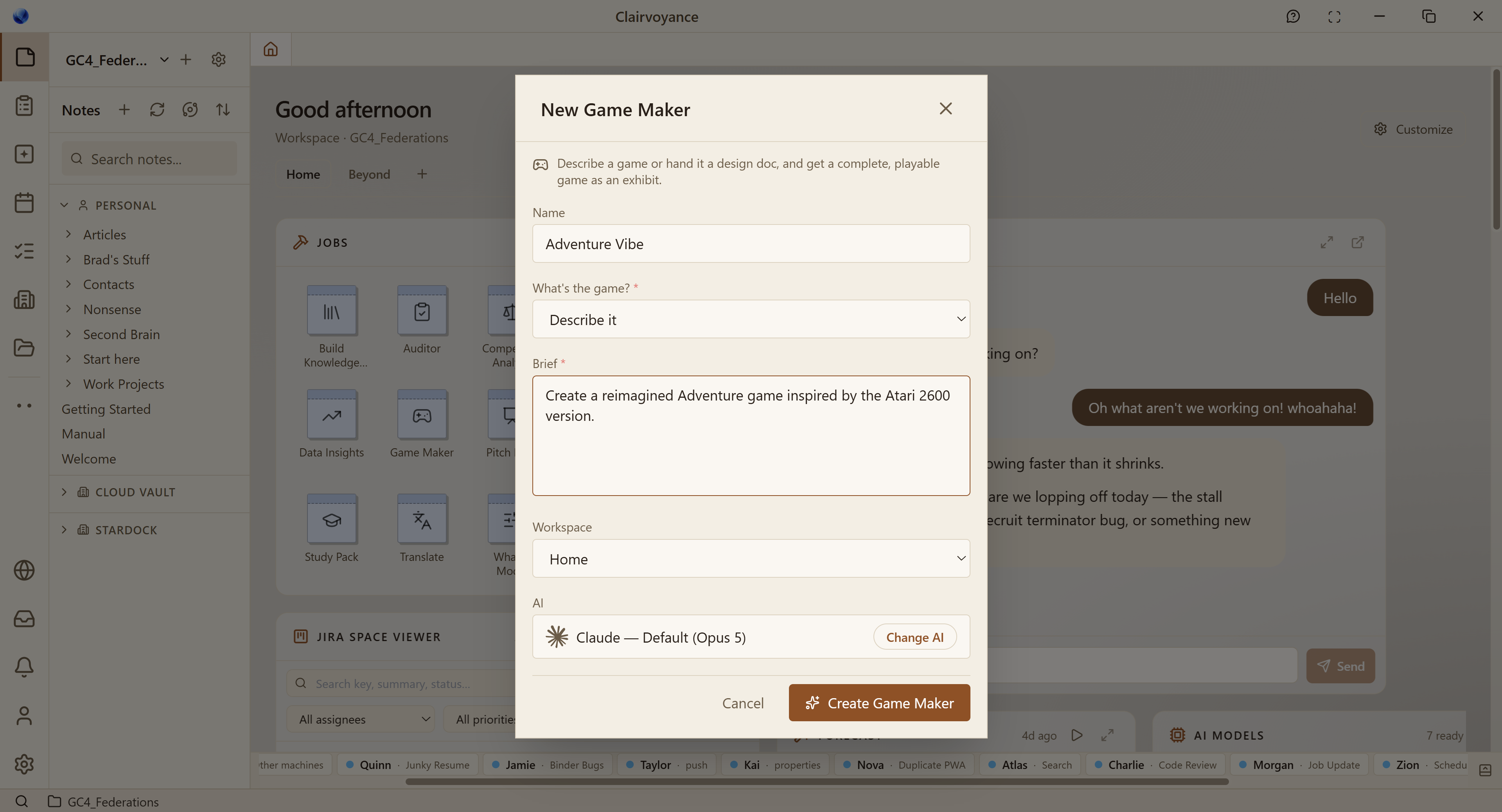
First fun little thing: The common AI jobs artifact now includes a Game Maker. Just describe what you want, and it will go make it.
Next up is the main (and admittedly less sexy) attraction: Data management.
Some of you may be old enough to remember when IBM, Microsoft, and Apple were chasing the holy grail of "Information at your fingertips". IBM and Apple had Taligent, Microsoft had Cairo (WinFS).
The idea was to componentize things so that you could work on your data in a much more intelligent way rather than loading gigantic, bloated apps. As you probably can guess, by the huge apps you are stuck using today, this failed.
The reason componentized apps (OpenDoc, COM, OLE, etc.) failed was because the first step was that data had to have a rich "metadata" wrapper around it. Data had to know what could be done with it. And shockingly, it was expected that humans would do most of this classifying by hand. Unshockingly, they did not.
Now, fast-forward to 2026 where Windows search is still terrible. You have to remember whether the piece of data you need is in a Teams message, Sharepoint, OneDrive, Documents, some "appdata" thing, Dropbox, Google Drive, Slack, Discord, etc.
The problem isn't that that the data is spread out. The problem is that there is no nothing keeping track of this. That is where Clairvoyance comes in.
Now, on the surface, Clairvoyance might just look like a worldclass AI agent orchestrator that bundles a great mark-down editor, mindmap app and code editor. And it does do that. But those features are prerequisites for the main event: Total Information Awareness.
Clairvoyance doesn't run in the cloud. It's on your machine at your command. And it can use AI to catalog all your files and it doesn't care where they are located. That is the goal anyway.
The first step is getting that Metadata set up. Users create workspaces and order an agent to catalog it.
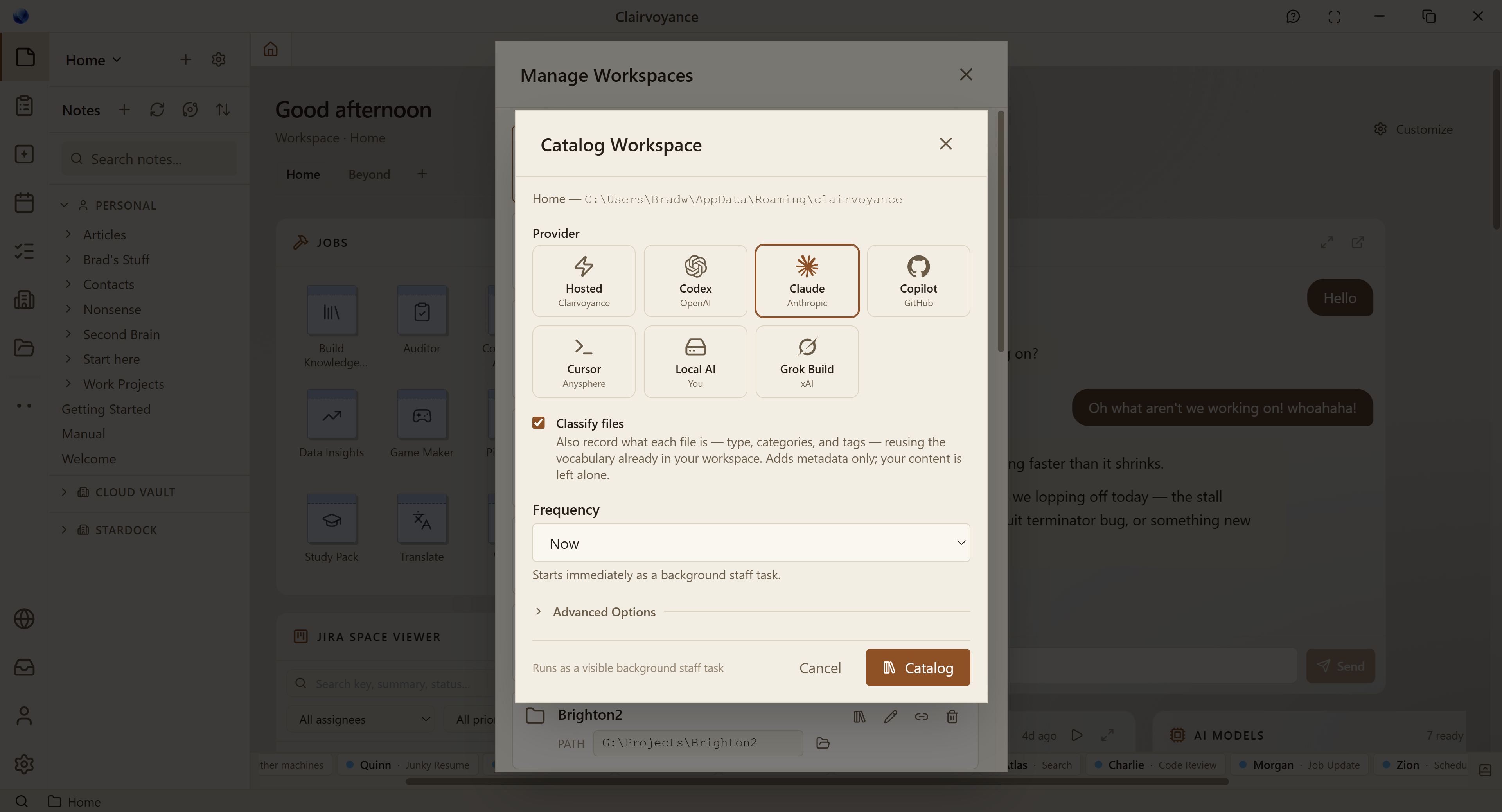
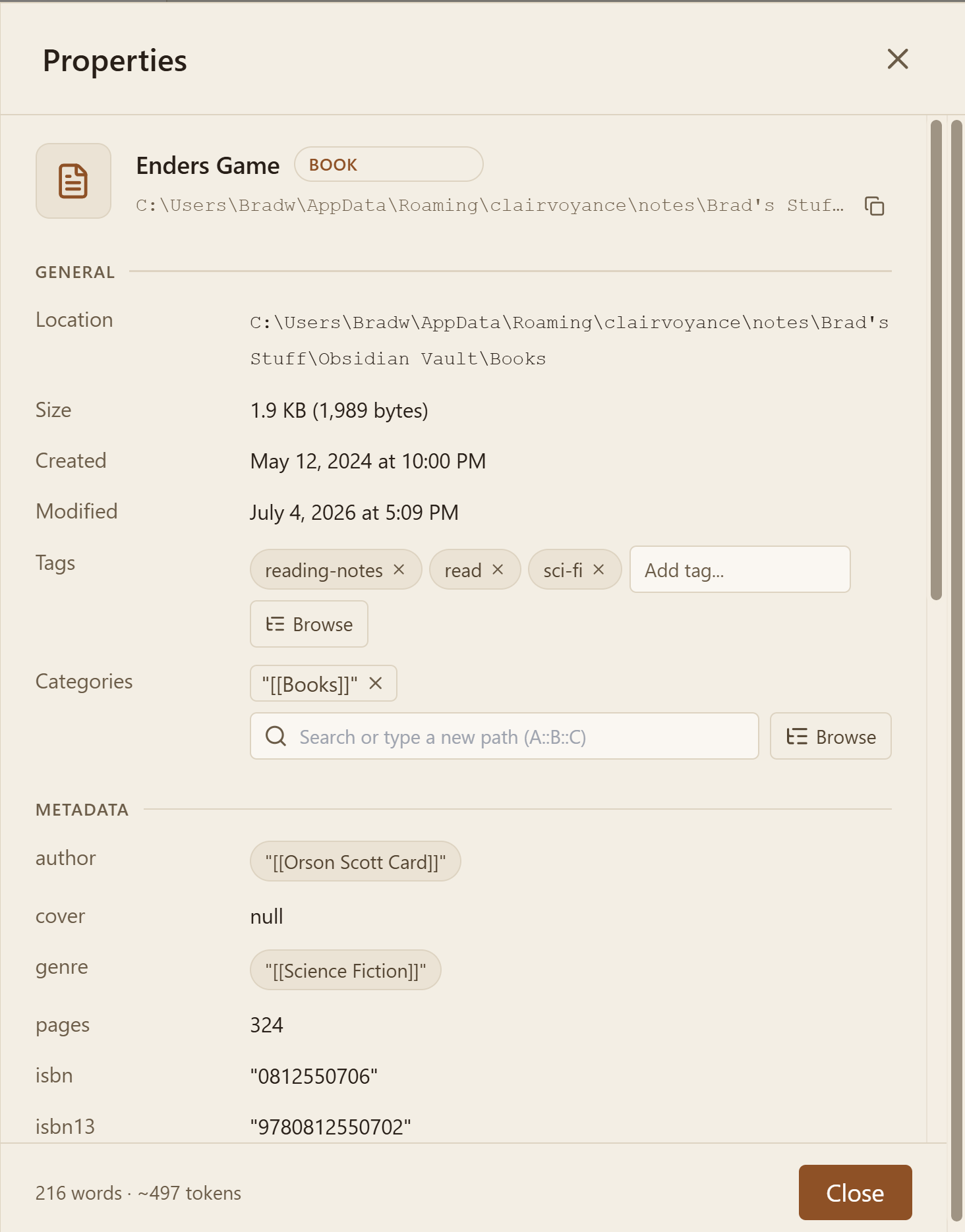
So AI will go through your files and add the metadata. Here's an example. Now, the metadata isn't really for our benefit. It's for search and AI to be able to know the relationships for.
Version 0.83 of Clairvoyance also adds "Deep Search" which lets people find this stuff.
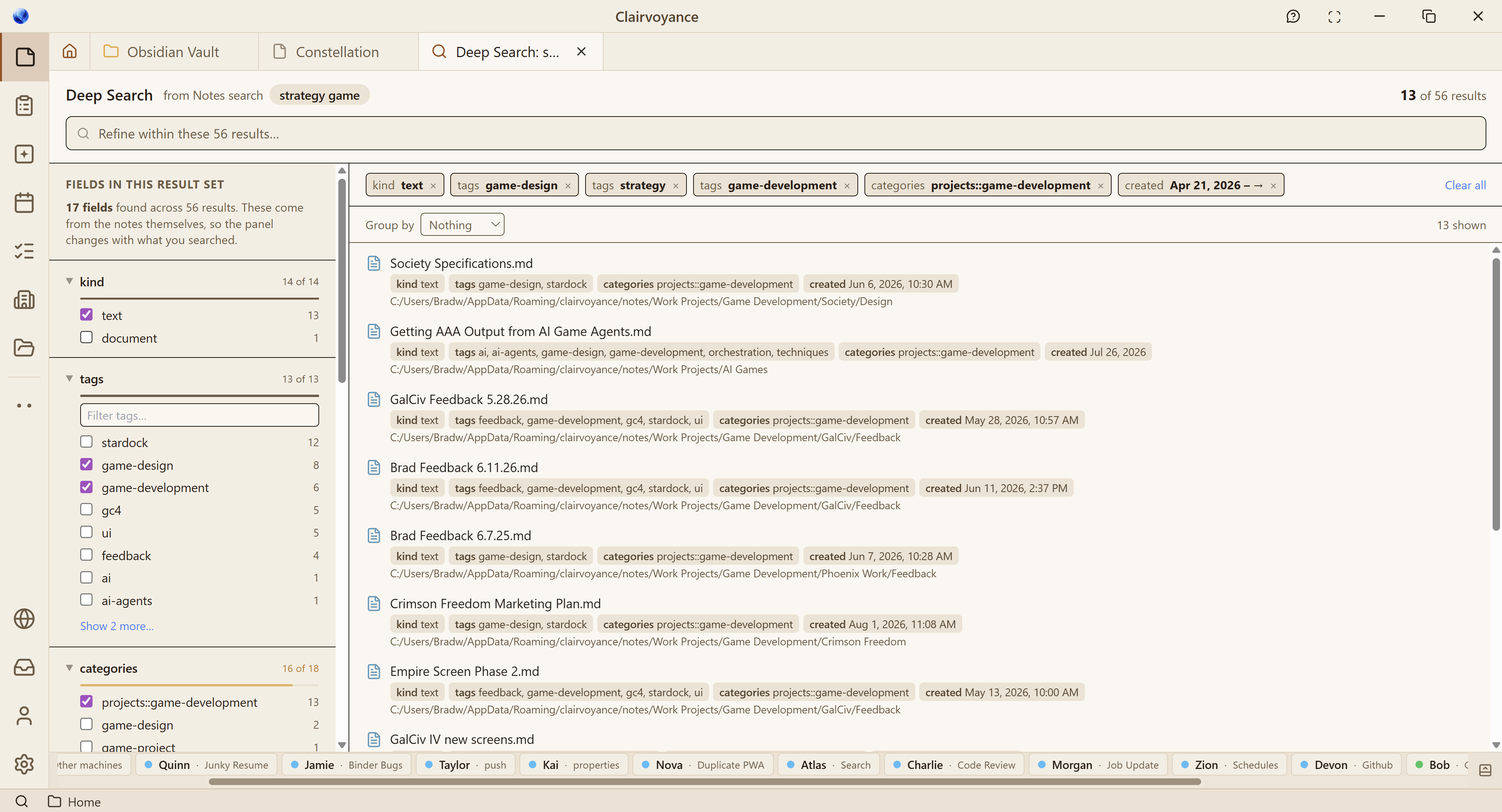
At Stardock, most of our data is spread between Google Docs, Dropbox, OneDrive and Sharepoint.
So the goal here is to have agents classify all this stuff and then instantly find it. And I mean instant (because metadata is basically nothing compared to searching a file).
The tricky part has been and continues to be getting all the different types of files classified. For instance, Adobe Premiere has one way of doing it and Excel has a different way.
The benefits are speed, less memory usage, and great at finding your stuff.
It's a lot of unglamorous work, especially making sure that the local AIs are able to do this seamlessly for users (because most of you are probably a: Sick of hearing AI hype and b: uninterested in having to know what "parameters" and "quantize" and other terms mean).